
The Science:
Organic Logic
OUR TECHNOLOGY:
BLACK SOLDIER FLY AS A SYNTHETIC BIOLOGY PLATFORM
Synthetic biology has traditionally focused on microbes due to the ease of genetic manipulation and their vast metabolic potential. Microbial systems have enabled the production of an array of products, from industrial enzymes to life-saving medications. However, scaling microbial fermentation often requires expensive, energy-intensive infrastructure and processed feedstocks.
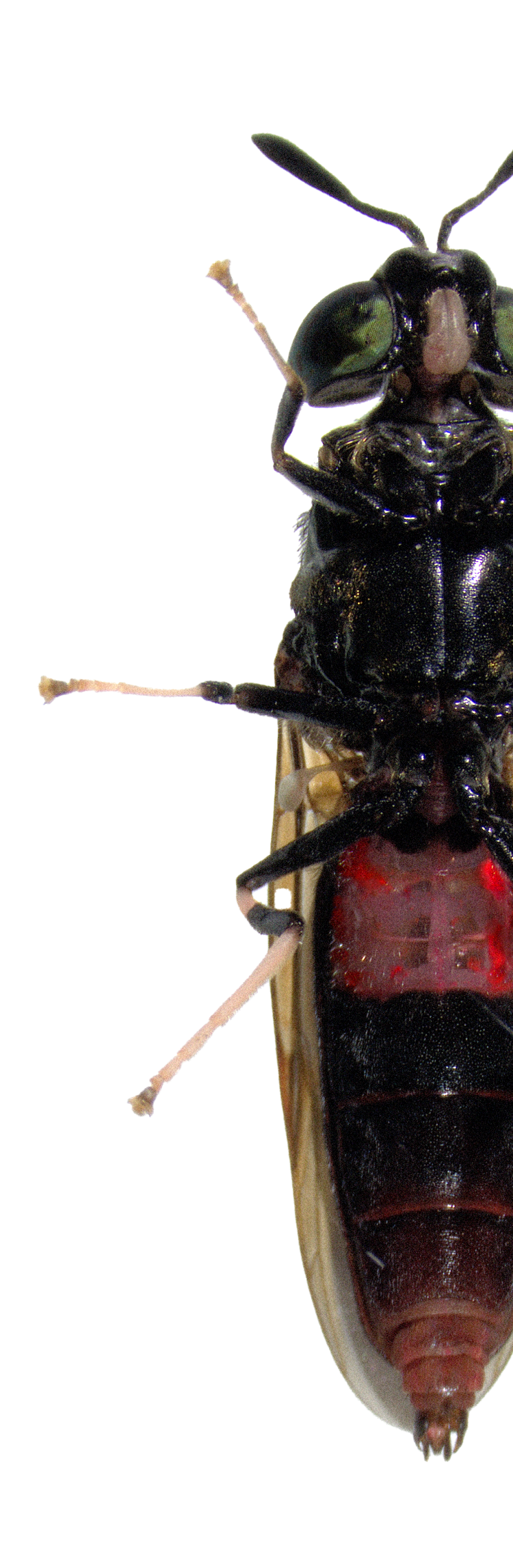
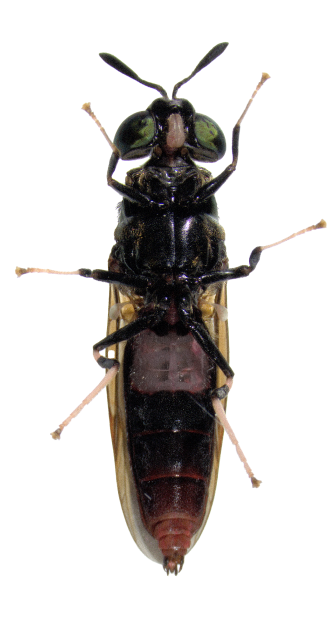
At EntoZyme, we are pioneering a new frontier: using the Black Soldier Fly (Hermetia illucens) as an insect-based biomanufacturing platform. This innovative approach retains the advantages of microbial synthetic biology while overcoming its limitations by leveraging BSF’s natural capabilities for waste processing and biomass production.
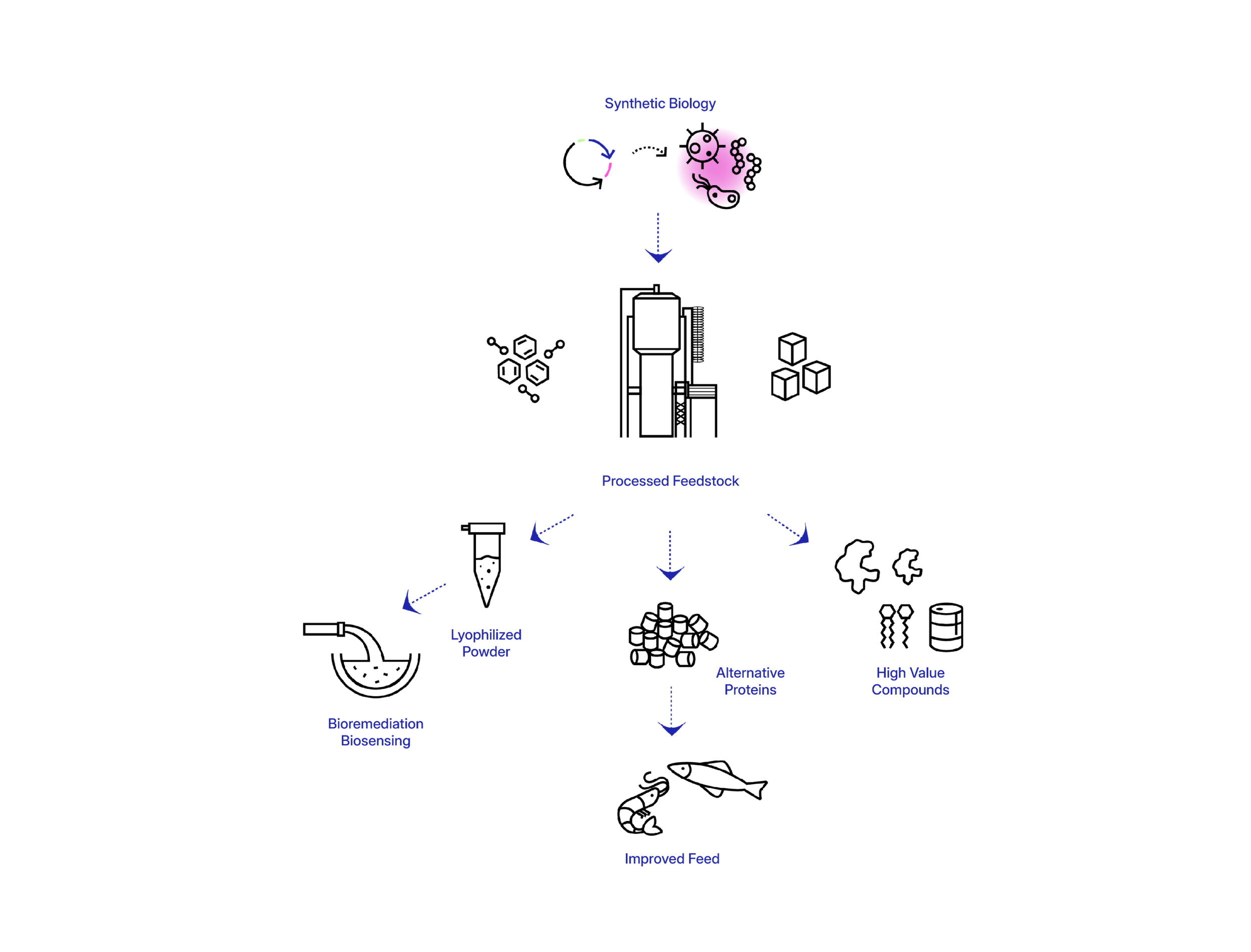
SYNTHETIC BIOLOGY USING BLACK SOLDIER FLY

REVOLUTIONIZING BIOMANUFACTURING
EntoZyme’s technology demonstrates how nature-inspired solutions can redefine industries. By combining the natural efficiency of BSF with cutting-edge synthetic biology, we’re unlocking new potential for sustainable waste management and biomanufacturing. Our platform bridges the gap between ecological responsibility and industrial-scale innovation.
Why Black Soldier Flies?

Natural Waste Processors
BSF larvae can consume a wide variety of organic waste streams, even those contaminated with hazardous substances.

Scalability
BSF farms are already capable of processing tens of thousands of tons of organic waste annually, making this platform inherently scalable.

Sustainability
Unlike microbes, BSF requires minimal pre-treatment of feedstocks, reducing the environmental and financial costs of biomanufacturing.
How we enhance BSF
Our advanced synthetic biology tools equip BSF with novel capabilities, enabling them to:
Expand Their Diet
BSF can be engineered to process otherwise challenging feedstocks, such as those containing lignocellulose or hazardous compounds.

Produce High-value Biomolecules
From industrial enzymes for textiles and detergents to omega-3 fatty acids, BSF can generate products for a variety of industries.

Improve Biomass Quality
By modifying BSF lipid and protein profiles, we create enriched outputs suitable for high-performance animal feed and other applications.
ADVANTAGES OF BSF SYNTHETIC TECHNOLOGY

Integrated Waste Management
BSF transforms organic waste into value-added products while cleaning up hazardous contaminants.

Reduced Costs
Minimal infrastructure is required compared to traditional biomanufacturing.

Circular Economy Contribution
By valorizing waste streams, we align with global sustainability goals and reduce greenhouse gas emissions
INDUSTRY 1.0 to 3.0: EXTRACTION FOR LINEAR MATERIAL FLOWS
The past ~200 years of industry has been based on a linear ‘take-make-dump’ economy which treated natural resources as infinite. A focus on material flows and efficiencies has come from the scale and scope of impacts we’ve created.

BIOTECH AND INDUSTRY 4.0: GROWING CIRCULAR BIOECONOMIES
EntoZyme enhances the emerging use of modular and scalable BSF waste processing facilities to unlock completely new possibilities. We use world-leading genetic engineering to tweak and enhance BSF in very specific ways. Our contributions turn BSF processors into biofactories that can process massive amounts of waste and produce highly valuable products cheaper than incumbent sources, with a tiny physical and environmental footprint.
Combining cutting-edge genetics, ecological principles, and operational partnerships to address a major issue for the planet- and the economy- EntoZyme is at the bleeding edge of what has been heralded as Industry 4.0, with transformative implications and opportunities for what we make, where we make it, and the impacts that we have on the planet.
